

Not only do bees forage and product their own food, they build their own homes – and make the materials to do it. The hexagonal cells of honeycomb and brood comb (where new bees are raised) are made of beeswax. But what is beeswax, where does it come from and what is it used for?
How bees make wax
Worker bees have wax glands, located on the underside of their abdomens. A simplified explanation of the creation of beeswax is:
- Honey Consumption: To be able to produce wax, bees need to consume a significant amount of honey. It takes about 6 to 8 pounds of honey to produce just 1 pound of wax.
- Wax Gland Secretion: The consumed honey is metabolised, and the wax glands secrete tiny flakes of wax through small pores on the bee’s abdomen. These wax flakes harden as they are exposed to air. When inspecting the floor of the beehive you will sometimes be able to spot tiny flakes of wax that were discarded or dropped before the bees could collect and use them. (Question: are bees just as clumsy as we are? Or do they sometimes decide “not good enough” and throw bits away?)
- Wax Flake Collection: Other worker bees collect these flakes using their legs and mouthparts. They then chew and soften the flakes to mould them into the desired shapes for the honeycomb.
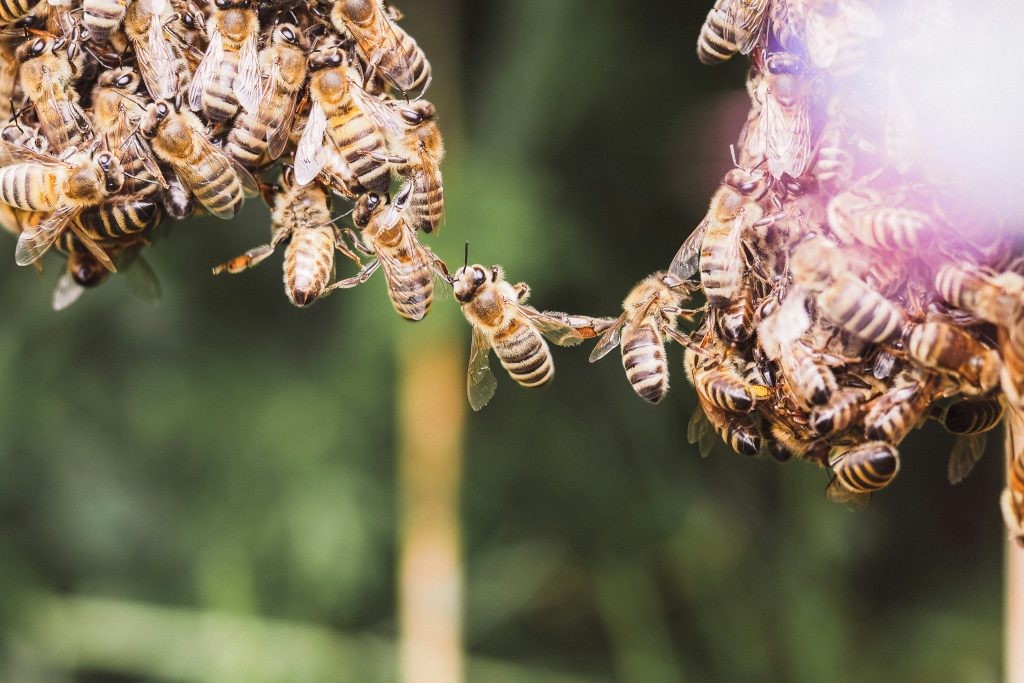
- Honeycomb Construction: The softened wax is meticulously shaped into the familiar hexagonal cells. This geometric shape is efficient in terms of space and structural strength. Hundreds of bees form chains, hanging from frames or existing honeycomb in order to construct the new cells. If you can see a frame where the comb has just started to be constructed you’ll see that it’s in the shape of a catenary curve – which is just a fancy way of saying the shape you get if you suspend a rope, string or chain from two horizontal points.
The Importance of Wax
Beeswax is essential to the hive’s structure and functions:
- Storage: Honeycomb stores honey, which is the primary food source for the colony, especially during winter.
- Nursery: The queen bee lays her eggs in the honeycomb cells, where they develop into larvae and eventually adult bees. When a new queen bee is raised, the worker bees build a larger, modified cell for her to develop.
- Insulation: The wax helps to regulate the hive’s temperature, maintaining an optimal environment for the bees.
Fascinating Facts about beeswax
- Bees must maintain a hive temperature of around 33-36°C to effectively produce wax.
- A single honeybee can produce about 1/12th of a teaspoon of honey in its lifetime, contributing to the production of wax.
The process of making wax showcases the intricate and highly organised nature of bee colonies. Each bee plays a critical role in the survival and success of the hive, demonstrating a level of cooperation and efficiency that continues to fascinate scientists and nature enthusiasts alike.
Next time you see a bee buzzing around, remember the incredible work happening back at the hive, where these industrious insects are busy crafting the wax that forms the foundation of their world.
What do we use beeswax for?
Beeswax is reused by the bees but when beekeepers process honey and manage the hives, a lot of it is removed. Beekeepers usually collect and clean the wax by heating and filtering it – it’s valuable stuff to humans as well as bees!
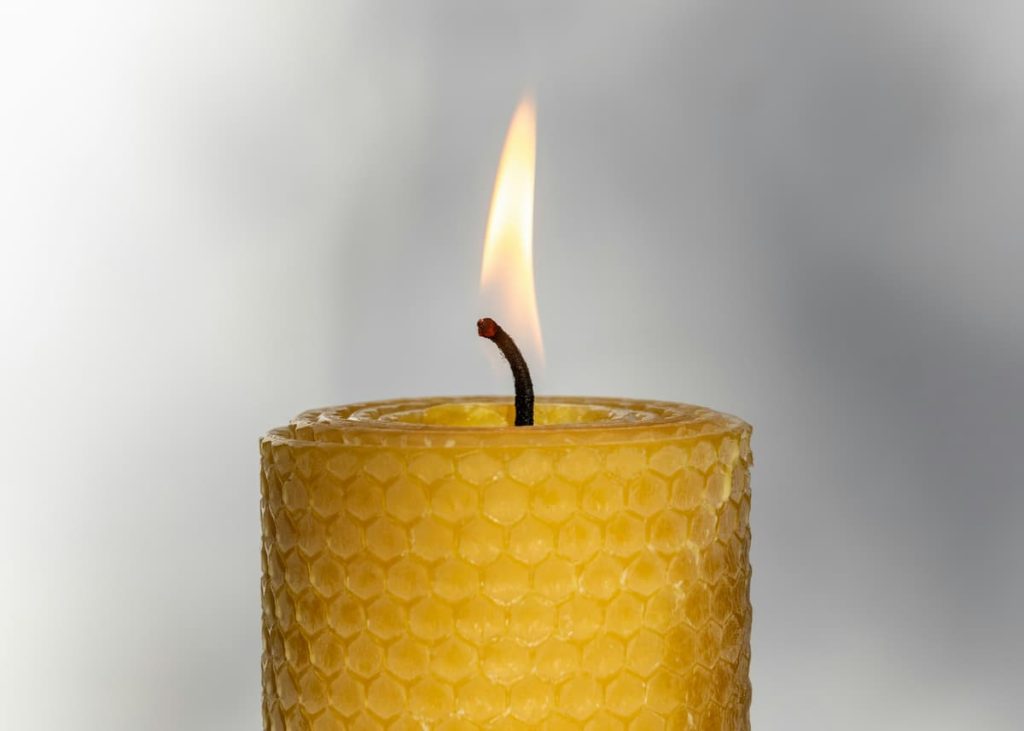
Beeswax can be turned in to candles, incorporated in to cosmetics, used in waterproofing fabric or polishing shoes and furniture – you can even make crayons if you have some pigment to hand! Next time you use a beeswax candle or beeswax wrap, remember all the hard work put in to producing it by bees and beekeeper alike!